Showing posts with label ZTE. Show all posts
Saturday, April 13, 2013
ZTE Grand X
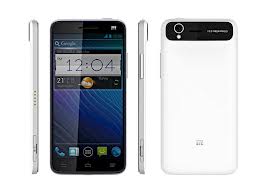
ZTE Grand X is one of the devices that comes to the mid to entry level market segment and we can expect some nice features with a pretty low price. This might be a decent choice for many users that are not looking to spend allot of money on a flagship device.
Form
The ZTE Grand X may not have the bold, pioneering design of Nokia’s premium models or HTC’s more recent offerings, but at the same time the design has been well thought out and it’s not a bad looking smartphone by any means.
It’s on the smaller side with its 4.3-inch display and although it’s pretty chunky at around 10mm thick, the curved corners work well and the proportions of the bezel around the screen are very narrow, making things look quite sharp.
At the bottom there are four capacitive controls for ‘settings’, ‘home’, ‘back’ and ‘search’, while at the top you’ve got the ZTE logo in silver, a light sensor port and a camera port.
The power button is positioned on the right of the top edge, which we found a bit of an awkward place for it compared to where we’re now more used to at the top of either side.
There’s also a 3.5mm audio jack on the left-hand of the top edge and along the left-side of the phone you’ll find the volume rocker at the top and a Micro USB port towards the bottom.
The front panel feels like fairly sturdy plastic – there’s no real flex to speak of, while the back panel is similarly robust with a rubber coating and a textured surface which gives very good grip, as well as making things visually interesting. The back panel is also contoured into a ‘lip’ at the bottom to help hold the device with one hand.
Aside from the texture and a small chrome ZTE logo in the centre the back panel is highly minimalist, although there’s also the sizeable camera port with LED flash in the top left corner.
Display
As previously mentioned , the touchscreen measures 4.3-inches. It’s a standard capacitive multitouch LCD with a 960×540 pixel resolution, giving a pixel density of 256 pixels-per-inch (ppi).
Picture quality is quite good with a fairly crisp level of clarity – it’s above average for this price point.
Colour reproduction and contrast are also both positive points, though we did find the screen a little dull for our liking even on the brightest setting and you can forget about using this phone in direct sunlight.
Hardware
Performance is fairly impressive thanks to an Nvidia Tegra 2 dual core processor clocked at 1GHz and paired with a ULP GeForce graphics processing unit (GPU).
It’s only got 512MB of RAM but you might be hard pressed to notice.
Admittedly a good deal of the smooth performance is going to be due to the efficiencies of Android Ice Cream Sandwich (ICS) as much as anything else, but consistently there’s no hint of stuttering whether you’re multitasking, browsing or gaming.
Speaking of gaming, Nvidia’s hardware is ideally suited to it thanks to the company’s extensive experience with graphics kit and the Grand X punches harder than you’d think.
It’s quite capable of running graphically demanding games such as Dead Trigger with no performance lag, although the back panel will heat up something fierce and you can expect the battery to drain quite quickly.
For internal storage there’s not very much to work with as the phone only has 4GB but it does support Micro SD cards up to 32GB, which is always useful.
Connectivity is fairly extensive with a 3.5mm audio jack, Bluetooth, Micro USB, Wi-Fi, Wi-Fi Direct, Wi-Fi Hotspot, GPS and DLNA.
Software
As the handset runs a stock build of Android 4.0.3 Ice Cream Sandwich it’s a fast, good-looking and rewarding experience.
However, the implementation by ZTE doesn’t have the stability we’ve come to expect from the platform.
We had two notable issues which were irritating to deal with.
On one occasion a folder we’d put together for the main dock bar bugged in such a way that it simply activated the ‘top’ shortcut from the stack of apps inside when pressed.
The only solution was to delete the folder and start again. Fortunately we didn’t have a second occurrence of this in our entire time with the phone.
The second problem was much more concerning as it happened multiple times.
Quite simply, the touchscreen froze, meaning we couldn’t really do much and were forced to reboot the handset. Fortunately a reboot consistently worked as a solution to the problem.
The odd crash here and there is to be expected on any computing device but it’s incredibly annoying that this error happened repeatedly, suggesting that anyone who uses this handset will have to deal with hiccups on a regular basis.
Admittedly, this sort of thing could possibly be patched out and we’d be interested to see if a bump up to version 4.0.4 of ICS or even 4.1 Jelly Bean might improve things.
As we mentioned in our earlier hands-on with the Grand X, it uses a third party keyboard: the TouchPal Curve.
Curve allows you to input text quite accurately by swiping your finger continuously from one key to another in a single press, and if you enjoy using this system there’s absolutely nothing wrong with it.
However, if you want to use conventional typing you’re best turning Curve off as we found it highly disruptive to normal text input – the two do not sit well alongside each other and you’re going to have to choose.
Aside from these issues, ICS on the Grand X is a breeze to use and very much preferable to either earlier versions of Android or the fussy overlays of other manufacturers.
Imaging
The cameras on the Grand X are nothing particularly special, the phone features a 5-megapixel primary with LED flash. You’ve also got provision for video calling with a VGA front-facing secondary.
There’s really not a great deal to be said here, it’s a budget phone and in this category the camera is usually (quite justifiably) the first thing to suffer.
Pictures and video are on the blurry side as you might expect, but also tend to come out a little dark.
Battery
The handset has a removable 1650mAh Lithium-ion battery pack. We found it’ll last about five hours of moderate use and around two hours of intensive video playback.
For normal use you’re looking at a daily charge here, which in fairness is fairly standard these days.
If you think you’re going to need the phone to be alive for some kind of important call or emergency don’t go playing lots of games or watching YouTube on it because you almost certainly will get caught short.
Final Thoughts
In all this isn’t a bad little phone and we certainly enjoyed our time with it and its Android Ice Cream Sandwich charms. It’s not without it’s problems, however, which are mainly bugs in the operating system.
While we’d be pleased to hear of ZTE rolling out a few bugfixes to combat them there isn’t anything here which would stop us from continuing to use the handset quite happily.
Although the battery life wasn’t low enough to affect our enjoyment of the Grand X we can imagine this being a breaking point for some users.
If you’re looking for something that will keep going for days then this isn’t the phone for you.
If, however, you want an accessible, no-nonsense device running Android Ice Cream Sandwich and for less than £200 then this might be right up your street.
View the original article here
Wednesday, March 13, 2013
ZTE Blade 3
The ZTE Blade 3 is the latest smartphone from the Chinese firm intent on bringing customers great value for money at the bottom of the mobile market.
While ZTE and it's Chinese compatriot Huawei both say they're targeting the full smartphone spectrum with recent high-end handsets such as the Grand S and Ascend D2, the reality is that they are still primarily considered budget handset manufacturers.
The budget ethos rings true with the ZTE Blade 3 as it will only set you back £69.99, plus a £10 top up from Virgin Mobile.
One of the reasons ZTE is able to keep its costs down is the fact that the Blade 3 is designed and manufactured in China, with the cheap labour and parts reflected in the final price.
ZTE claims it's in talks with other mobile carriers about ranging the Blade 3, but for now only Virgin Mobile have the handset in store.
Although the price tag suggests that the Blade 3 is an entry level device it actually sits in the middle of ZTE's smartphone line up, with the high-end Grand series above and the super-budget ZTE Kis below it.
The mid-range tag becomes more apparent when you take a look at the specs with the Blade 3 sporting a 4-inch 480 x 800 display, 1GHz single-core processor, 512MB of RAM, 4GB of internal storage (although only 2.5GB is accessible) and a 1,600mAh battery.
It's not exactly a scintillating spec list, but considering the sub-£100 price tag you're getting a decent amount of bang for your buck.
This means the ZTE Blade 3 is going head to head with the slightly more expensive Huawei Ascend G330 and the likes of the HTC Desire C and Sony Xperia Miro, both of which will set you back around £100 more.
Indeed in terms of design there's little to choose between the Blade 3 and its Chinese counterpart the Ascend G330.
Measuring 120.5 x 63.5 x 10.85mm and weighing 133g the ZTE Blade 3 is a good size and weight with a well balanced finish reducing the risk of dropping the handset.
Unsurprisingly the Blade 3 has a noticeably plastic finish, although it's pretty sturdy and the slightly curved rubberised rear means it's easy to hold.
Up top there's a headphone jack and an easy to hit power/lock key, while down the left hand side is a volume rocker key with a microUSB port located on the base of the Blade 3.
Under the 4-inch display you'll find four touch buttons used to navigate around the Android 4.0.4 Ice Cream Sandwich operating system.
The keys are typical Android fare; menu, home, back and search and all were pretty responsive to our various pokes and prods.
The display on the Blade 3 is responsive and Android looks crisp and clear, although on closer inspection it's obviously not HD quality.
You can easily peel off the rear cover of the Blade 3 giving you access to the microSD slot and removable 1,600mAh battery which should see you through the day thanks to the modest innards and screen.
View the original article here
While ZTE and it's Chinese compatriot Huawei both say they're targeting the full smartphone spectrum with recent high-end handsets such as the Grand S and Ascend D2, the reality is that they are still primarily considered budget handset manufacturers.
The budget ethos rings true with the ZTE Blade 3 as it will only set you back £69.99, plus a £10 top up from Virgin Mobile.
One of the reasons ZTE is able to keep its costs down is the fact that the Blade 3 is designed and manufactured in China, with the cheap labour and parts reflected in the final price.
ZTE claims it's in talks with other mobile carriers about ranging the Blade 3, but for now only Virgin Mobile have the handset in store.
Although the price tag suggests that the Blade 3 is an entry level device it actually sits in the middle of ZTE's smartphone line up, with the high-end Grand series above and the super-budget ZTE Kis below it.
The mid-range tag becomes more apparent when you take a look at the specs with the Blade 3 sporting a 4-inch 480 x 800 display, 1GHz single-core processor, 512MB of RAM, 4GB of internal storage (although only 2.5GB is accessible) and a 1,600mAh battery.
It's not exactly a scintillating spec list, but considering the sub-£100 price tag you're getting a decent amount of bang for your buck.
This means the ZTE Blade 3 is going head to head with the slightly more expensive Huawei Ascend G330 and the likes of the HTC Desire C and Sony Xperia Miro, both of which will set you back around £100 more.
Indeed in terms of design there's little to choose between the Blade 3 and its Chinese counterpart the Ascend G330.
Measuring 120.5 x 63.5 x 10.85mm and weighing 133g the ZTE Blade 3 is a good size and weight with a well balanced finish reducing the risk of dropping the handset.
Unsurprisingly the Blade 3 has a noticeably plastic finish, although it's pretty sturdy and the slightly curved rubberised rear means it's easy to hold.
Under the 4-inch display you'll find four touch buttons used to navigate around the Android 4.0.4 Ice Cream Sandwich operating system.
The keys are typical Android fare; menu, home, back and search and all were pretty responsive to our various pokes and prods.
The display on the Blade 3 is responsive and Android looks crisp and clear, although on closer inspection it's obviously not HD quality.
You can easily peel off the rear cover of the Blade 3 giving you access to the microSD slot and removable 1,600mAh battery which should see you through the day thanks to the modest innards and screen.
View the original article here
Thursday, February 28, 2013
ZTE Grand S

When the "world's thinnest" term is used for one of the Full HD 5-inchers, one ought to listen. That's precisely the moto ZTE is using to brag about its Grand S flagship it unveiled at CES 2013, and, at just 6.9 mm thin, who can blame the manufacturer for basking in the phone's svelte dimensions.
The Grand S sports the said 5" 1920x1080 pixels display, and gets powered by a pimped quad-core 1.7 GHz Snapdragon S4 Pro. It also has 2 GB RAM and 16 GB of storage, yet makes room for a microSD slot. A 13 MP rear cam and a 2 MP front-facing shooter capable of 1080 video round up the top-shelf specs, but at 1,780 mAh, the battery takes a hit for allowing the Grand S to strut its slim chassis on the Android catwalk.

View the original article here
ZTE Grand Memo
ZTE Grand Memo is the largest smartphone in the company's history. How large is large, you ask? Well, it sits right there in phablet territory with its massive, 5.7-inch display. We aren't dealing with one of those fancy 1080p panels, however. Instead, the screen has a resolution of "only" 1280 by 720 pixels, which definitely isn't bad, but that's just not as many dots as you'd get from, let's say the ZTE Grand S flagship.
But other than that, the ZTE Grand Memo packs some impressive hardware, such as its quad-core Snapdragon S4 Pro SoC running at 1.7GHz. There's a 13MP snapper on its back as well, and the unit itself has a respectable thickness of only 8 millimeters. Which version of Android the smartphone will ship with has not been mentioned, but what we do know is that its interface is complemented by a T9 keyboard made for single-handed use
View the original article here
But other than that, the ZTE Grand Memo packs some impressive hardware, such as its quad-core Snapdragon S4 Pro SoC running at 1.7GHz. There's a 13MP snapper on its back as well, and the unit itself has a respectable thickness of only 8 millimeters. Which version of Android the smartphone will ship with has not been mentioned, but what we do know is that its interface is complemented by a T9 keyboard made for single-handed use
View the original article here
Subscribe to:
Posts (Atom)