Showing posts with label Sony. Show all posts
Sunday, April 14, 2013
Sony Xperia Go
Even Sony Xperia Go was delivered to the market all the way back in the 2012 we will deliver information’s about this device. This is mainly because it can be interesting to users that are looking for an entry level to mid range device.
Aesthetics
You’d assume the Xperia Go looks like a phone version of the Michelin Man but it’s actually very reserved. Dare we say it: it’s actually slightly girly. But that’s not a bad thing. Rather than have deep tire-type ridges and a bulky frame like the JCB, which indicates you spend your day digging up roads, you get a mobile phone that is small, elegant and sturdy.
In fact, the only real indication it’s built to take a beating is the odd texture on the back, which seems to divide opinion as easily as marmite. In our preview we said it feels like you could use the Xperia Go for an impromptu wood sanding session because of its textured, slightly grainy feel, and we still feel the same way now.
Odd to the touch, it definitely is, but we soon became accustomed with the texture. Less so the scratches it picks up all too easily.
On the front of the device beneath its 3.5-inch display are three buttons, one for back, home and menu. The volume rocker lives on the right side, making it easily accessible. Sony has opted to put the power/unlock button on the top at the left, which is pretty typical.
Hardware
Where the Xperia Go starts to push away from the crowd of rugged smartphones is on the inside. A dual core 1GHz processor and 512MB of RAM means the Xperia Go is better equipped to run the apps and games that require more juice.
It also means Android Gingerbread actually runs surprisingly fast, probably thanks to some work on Sony’s part. Unless you require the absolute best performance for something like Shadowgun, you shouldn’t be disappointed. This isn’t the sort of device you would buy for sheer performance, though, so it’s a moot point.
Take the back cover off and you find rubbery grommets protect the microSD and SIM-card slots, reminding you this is one tough customer. You also find a nice shade of turquoise, which makes us wonder why the much more attractive colour is hidden on the inside. It’s a bit like buying an Armani suit and wearing dungarees over the top.
Suffice to say, the Xperia Go includes lots of clever design to keep the water out, and the dust too, although we can’t say we’ve ever had to say our farewells to a device left on a particularly dirty shelf.
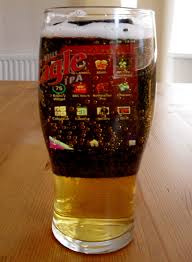
Overall, Sony has built a very solid Android device and we really think it could survive a drop into a pint, which makes it perfect for the more clumsy among us.
Display
A 3.5-inch display is relatively dinky when most smartphones are striving to double up as runways, but for anyone who is used to a feature phone it’s plenty. In fact, it’s actually adequate enough for web browsing, email checking and sending text, although the latter depends on how small your digits are. The Android keyboard can be a frustrating beast at times, no matter how big it gets.
Powered by Sony’s Mobile Bravia Engine, colours are natural and the brightness is pretty good. Not so great is the resolution, which is 480×320 pixels, but it’s just about adequate unless you spend a lot of time looking at photographs or HD video.
Camera and video
Firing up the camera reveals a relatively capable experience. Digital zoom, autofocus and a LED flash provide you with all the basics, and the quality in bright conditions is good. The contrast is strong and colours look reasonably accurate, too, and we liked how it very quickly detected faces when taking portrait photographs.
Video is 720p quality, and we were pleasantly surprised how good it was considering the Xperia Go costs £220 SIM-free. It adjusted quickly to light changes and even with fast movement it kept blur manageable. Minus its inability to light up subjects when the background is very bright, we were happy with how our test videos looked.
Operating system
Android 2.3.7 Gingerbread is now two steps behind the latest and greatest version, Jelly Bean. This means you are automatically behind the times when you buy the Xperia Go, even if Ice Cream Sandwich comes along soon. And according to Sony, it will.
Android fans may shun the notion but Joe Public probably won’t care. The main point is Android allows you to do all the things you would expect from a smartphone, such as social networking, email, watching YouTube videos and making calls, and that’s great.
Android’s market, now known as Google Play, has more than half a million apps available, many of which are free, so you’ll find virtually everything you need and they won’t necessarily cause damage to your wallet.
Sony’s user interface overlay is fairly unobtrusive so we didn’t feel the need to ditch it in favour of something like Launcher Pro. But on the low-resolution display it did feel a bit dated, and even though you can customise Android to your heart’s content, we maintain the view that it can be a bit of a pain to find certain options.
General use
Because of the Xperia Go’s small frame, it’s easily pocketed but not so light you forget its there, which means less of those panic moments when you think you’ve left it in the pub.
We weren’t too sure whether we liked it at first, but its odd looks started to appeal. Compared with the Sony Xperia S, the Xperia Go is relatively lacklustre but the simplistic lines are anything but ugly. Less really is more in this instance.
The call quality was good and a microSD slot meant we could upgrade the storage, if we so desired. That’s unusual, given the trend of previous Xperias ditching the option, so it’s another brownie point. Still, 8GB with 4GB usable is pretty measly.
Our only real gripe stems from how much dust, dirt and scratches the case picks up. It’s probably a non-issue for the white version but our black review model looked pretty tatty after a few days of use, which somewhat spoils the look.
Valuing our relationship with Sony, we decided to not catapult the Xperia Go into a wall or fire it out of a cannon. But we dropped it a number of times on a variety of surfaces and all was well. It survived a puddle, too, but we get the feeling prolonged periods of time sat in a pint wouldn’t end well. It’s not bulletproof or as strong as the JCB but the trade-off is subtlety.
Battery life
We managed a good day’s use with the Xperia Go, even with lots of web browsing and gaming. In this department it was capable, but certainly not outstanding, perhaps due to the limited space for a large battery. Don’t think you’ll be taking the battery out, by the way – it’s integrated into the device.
Conclusion
For around £220 you could get the more attractive HTC One V and a more recent version of Android, but the Xperia Go is more about survivability, which it does very well. It’s got Sony’s much-improved build quality all over it, and although the display is quite low resolution, the addition of Bravia technology means it looks very good.
If you need a phone that can take a hit and you don’t mind being a bit behind the times, the Xperia Go is a very capable alternative to the Motorola Defy and the JCB.
View the original article here
Saturday, April 13, 2013
Sony Xperia tipo
Sony Xperia tipo comes to the budget friendly market and even it represents pretty cheap device it offers nice features. This device is ideal for people that are not chasing high end performances and flagship devices.
Aesthetics and design
The tipo (yep, that’s a lower case ‘t’ in there), is a tiny phone, designed for small hands. If you’re a bit of a monster-digit then you might want to steer clear. The small handset will fit nicely in the pocket though, being 103 x 57 x 13 mm in size and its weight of 99.4g won’t weigh you down.
For all its low cost Sony has thought a bit about the look and feel, and the tapering of the edges inwards is a neat touch and makes a change from blockier designs. The inward curve arguably makes the phone a bit more comfy to hold than straight-sided phones too.
There’s also a little lip of bright shiny plastic beneath the three touch-sensitive shortcut buttons under the screen that takes the phone away from being a rectangular monolith.
Build quality isn’t bad. Yes the phone flexes slightly if forced, but it feels quite solid for all that. And Sony has mounted the headset slot where it should be on the top edge to keep music lovers happy. So far, then, so good.
Display
A small phone inevitably means a small screen, and this is a bit of a problem especially when it is low resolution too. The screen here measures 3.2 inches and it has 320 x 480 pixels. Reading web pages isn’t the most rewarding experience as you have to do a lot of scrolling. Watching video is less enjoyable than it could be too. Tapping at the keyboard is tricky if you’ve larger hands.
That’s not our only gripe with the screen either. It seemed to be a bit reluctant to respond to taps sometimes. This wasn’t so bad as to really irritate, but every now and again a tapped icon failed to react, and we felt irked.
Hardware
A phone that costs £126 isn’t going to have earth shatteringly good hardware, but the mix needs to be serviceable. What you get here is an 800MHz Qualcomm processor which is supported by 512MB of RAM. It does OK, but isn’t blistering – which is what you’d expect really.
We did find that sometimes apps were a bit slow to load, and some YouTube clips took their time to render and play too. But it is nothing beyond what’s to be expected for a handset at this price.
What did irritate us was a memory expansion issue. With just 2.5GB of built in storage you’ll need a microSD card and the slot is under the battery. If you like adding data such as music by swapping cards in and out, then the need to power down first will become a pain.
And you just might want to swap microSD cards in this way, because probably one of the key strengths of the Xperia tipo is its music playback.
This handset sports Sony’s xLOUD audio technology. That, says Sony, is designed to deliver crisp and loud sound. It’s certainly loud. Louder than we’re used to from any mobile phone. Music quality is good too, with tinny tones coming in at the top volume levels but overall impressive quality being delivered.
Camera and video
There’s a crunch when it comes to the camera though. A 3.2 megapixel flashless shooter with video limited to VGA quality isn’t exactly going to light up the world. Snap quality is so-so and while there are a couple of scene modes (beach and snow, night, sports), the controls are generally lacklustre.
In general we’d say the camera is OK for shots and video you want to keep on the handset for fun, but if you have any intention of using the media you capture elsewhere, get a proper camera.
Operating system and software
Android 4.0 is not to be sniffed at and it is great that Sony has managed to cram it into this small, low cost phone. There’s no word on an upgrade to 4.1 Jelly Bean though, so purchasers might not be at the top of the OS tree for long.
Sony’s skin is fairly harmless. There’s none of the corner-icon business that made the teeny Xperia X10 mini so alluring and things feel intuitive and easy to get at.
There are a couple of useful apps in the form of a battery life extender called Power Save and a neat utility called LiveWare. The latter lets you configure specific apps to start when you plug in headphones, charger or a headset. How convenient, for example, would it be to plug in a headset and have the dialler fire up automatically?
Power Save lets you set the phone up to shut off certain functions, say Wi-Fi or vibrate, to help eek that little bit more battery life out of the handset. It can be set to kick in when the battery gets down to a pre-set level, or at certain times of the day, or even just when you manually choose it.
Final thoughts
The Sony Xperia tipo might seem like a very attractively priced handset and indeed the lure of Android 4.0 for £126 is great. But be sure the other good things about this phone are what you want. Music? Check. Web browsing? Not so good.
next sony flagship phone în 2013 2014
View the original article here
Saturday, March 16, 2013
Xperia SP
Xperia SP
Following reports of the Xperia SP and Xperia L being listed for preorders by as many as four UK retailers, a supposedly original press render of the Xperia SP, also known as C530X - 'Huashan' is now doing the rounds on Chinese sites, according to a report by the Xperia Blog.
The phone features the same design as seen in the Xperia Z but a more compact form factor. However, one can't really make out the exact size of the phone from this render. The phone sports the same aluminum round power button that we've seen in the Xperia Z. The placement of the keys on the side are different, and the phone adds another key in addition to the volume rocker and the power button. Another major difference is that that the white coloured model has a white front, and there's a small strip towards the bottom. Also, we couldn't find the presence of any protective flaps and the material used in the frame looks pretty different from that used in the Xperia Z. The home screen looks similar though.
This is not the first time that the phone's images have made an appearance online. Earlier this year, another set of images were leaked on a German forum. The render looks similar to the images except that it's white in colour.
According to earlier rumours, the Xperia SP is expected to come with Qualcomm Snapdragon S4 Pro MSM8960T chipset with a 1.7GHz dual-core processor and Adreno 320 graphics. As per the rumours, this smartphone will sport a 4.6-inch 720p display, 8-megapixel Exmor RS camera and 8GB of internal storage. It is expected to run Android 4.1.2 (Jelly Bean) operating system, sporting firmware version 12.0.A.0.298 and the 3.4 kernel, as evident from previous leaks.
SOURCE:gadget
Following reports of the Xperia SP and Xperia L being listed for preorders by as many as four UK retailers, a supposedly original press render of the Xperia SP, also known as C530X - 'Huashan' is now doing the rounds on Chinese sites, according to a report by the Xperia Blog.
The phone features the same design as seen in the Xperia Z but a more compact form factor. However, one can't really make out the exact size of the phone from this render. The phone sports the same aluminum round power button that we've seen in the Xperia Z. The placement of the keys on the side are different, and the phone adds another key in addition to the volume rocker and the power button. Another major difference is that that the white coloured model has a white front, and there's a small strip towards the bottom. Also, we couldn't find the presence of any protective flaps and the material used in the frame looks pretty different from that used in the Xperia Z. The home screen looks similar though.
This is not the first time that the phone's images have made an appearance online. Earlier this year, another set of images were leaked on a German forum. The render looks similar to the images except that it's white in colour.
According to earlier rumours, the Xperia SP is expected to come with Qualcomm Snapdragon S4 Pro MSM8960T chipset with a 1.7GHz dual-core processor and Adreno 320 graphics. As per the rumours, this smartphone will sport a 4.6-inch 720p display, 8-megapixel Exmor RS camera and 8GB of internal storage. It is expected to run Android 4.1.2 (Jelly Bean) operating system, sporting firmware version 12.0.A.0.298 and the 3.4 kernel, as evident from previous leaks.
SOURCE:gadget
Friday, March 1, 2013
Sony Xperia Tablet Z
The big news about Sony's Xperia Z Android tablet is not that it sports a 1920x1200 pixels display and quad-core processor - after all, we had the iPad 3/4 and Nexus 10 before it - but that the Full HD resolution screen is crammed into an extremely thin 6.9mm waterproof chassis, with stellar design to boot. It is also the first Xperia slate to feature the signature power button design as a new design hallmark of Sony's Xperia line.
View the original article here
Sony Xperia Z

The specs on the Xperia Z are what we expected from the rumors. It will be a 5" 1080p display, a 1.5GHz quad-core Snapdragon processor, 2GB of RAM, LTE, a 2330mAh battery, and the highly anticipated new 13MP Exmor RS camera sensor. As we saw in leaked images, the Exmor RS camera sensor will allow for HDR video recording, and a newly announced feature is that it will also offer a 10fps burst mode at 9MP. The phone also has NFC and a microSD card for those of you looking for that.
An interesting addition to the Xperia Z is that the phone will be water resistant to a depth of one meter. To achieve this, the Xperia Z has glass panels on the front and back, as well as plastic strips on the sides that cover the ports. And, they cover all of the ports from microSD card slot, to headphone jack, to microUSB.
The phone will be running Android 4.1 Jelly Bean, which is part of the reason why the March release date is so disappointing, because that will be coming up on Google I/O and the expected announcement of Android 5.0, although Sony has promised an upgrade to 4.2 "soon after launch".
View the original article here
Sony Xperia ZL
If you thought Xperia Z is amazing, but could make do without the waterproof part of it, Sony's got you covered, as it introduced the Xperia ZL sibling, with an even more compact design. With its 5.18" x 2.74" x 0.38", it is shorter than the Z, and a soft-touch curved back nestles it comfortably in your palm grip.
The microSIM and microSD slots are situated under a large flap at the back bottom, and the phone is graced with a dedicated shutter key, unlike the glassy, watertight Z.
Specswise it is identical - a 5" Full HD screen with Mobile BRAVIA Engine 2, and the typical for the tech weak viewing angles, a quad-core Snapdragon S4 Pro, and a 13 MP rear cam with HDR video capabilities. The funky part here is not only the circular power/lock key on the right, but also the front-facing camera, which is situated in the lower right corner of the phone, where you are used to find one of the Android navigational keys, which here are on-screen.
Besides the shape and size, there is a slight difference in battery capacity between the two - the ZL has a sealed 2,370 mAh unit, which is a tad bigger than the one in the Z. The long-rumored IR blaster is indeed here, with the accompanying app that allows you to use the phone as a remote control for a wide variety of TVs, home stereos and other assorted electronics around the house
View the original article here
Subscribe to:
Posts (Atom)


